

Laser Rod Alexandrite Facet Rough Lab Created Crystals
Laser Rod Alexandrite Facet Rough Lab Created Crystals
44 in stock
Couldn't load pickup availability
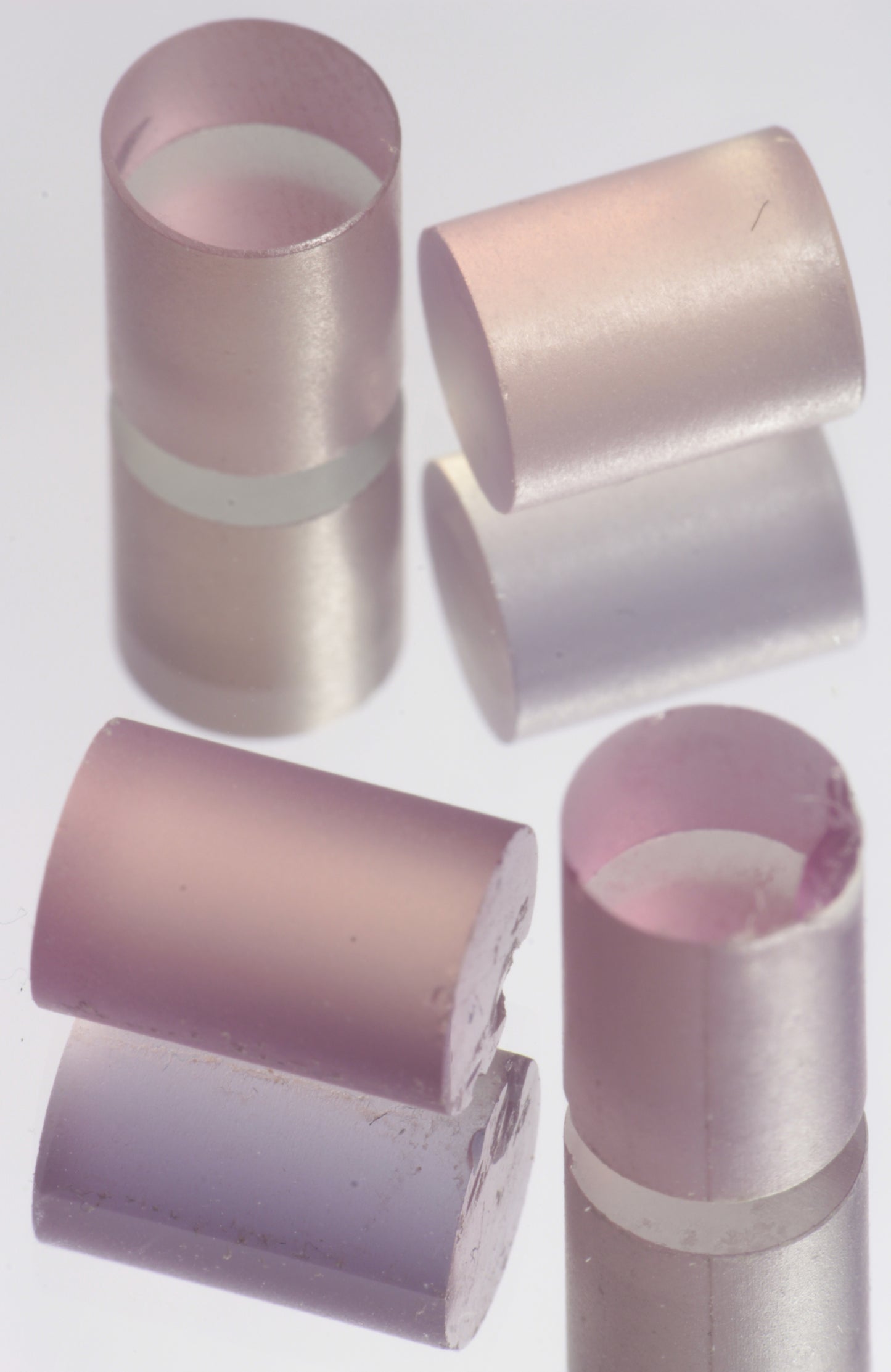
These are genuine, lab-created alexandrite facet rough. These pieces were sawn from laser rods, either during initial production or refurbishment efforts (don't worry, no laser-grade rods were harmed in the making of this rough!)
We recently got our hands on a few decommissioned rods of alexandrite from lasers! These rods likely lived out a full career inside lasers as a crystalline lasing medium, but eventually they were pushed too far or had dust land in the wrong spot and the ends blew off, rendering them inoperable. In these cases the rods can sometimes be sawn and repolished, leaving pieces that are now usable for gems. These may have also been removed during the initial production of the laser rods before they were used. Either way, now they get to live out their retirement as gemstones! While they may have been designed for science they make amazing gems as well. They have a strong color change from blue-green to purple-pink and better yet often show flashes of both in mixed lighting when cut--the camera struggles to capture this, especially the green colors. On top of that they also show rich red fluorescence which affects their color, and the angle of lighting will also cause differences in color because this material is strongly trichroic.
Alexandrite is the color-changing chromium-bearing variety of chrysoberyl, and it has been a popular gem since the first natural deposits were discovered in Russia. Its high hardness (8.5) and durability make it suitable even for ring wear, and that along with its incredible combination of colors has made it a classic. The only thing holding it back is its rarity. Oddly enough even lab-created alexandrite is quite uncommon. Synthetic alexandrite is mostly grown for industry, where it is used in some particular high-end laser systems, and the process to grow it is very expensive. Very little is produced anymore, and even when it was produced it was uncommon on the gem market. Usually instead lab-created sapphire with a color change effect was sold as alexandrite, but that material really can't hold a candle to alexandrite.